
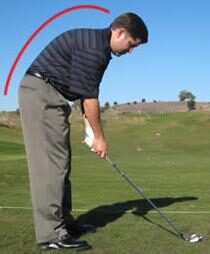
The Connection Between Posture and Golf Performance
In a previous post “Stand Right So You Don’t Hit It Right” we discussed posture at address and how poor posture will lead to flawed swing movements and potential injury. We also gave you a simple drill to help educate your body to move into an ideal posture position. If you haven’t read it yet, you can correct your address position with better posture by starting there before diving into the flexibility work below. However, some golfers may find it challenging to get into this position. Asking what is necessary from the body to comfortably set-up into a neutral posture requires adequate flexibility, strength, and motor control. More times than not, amateur golfers’ first issue is flexibility, so today we will discuss a common villain, the hamstrings. In fact, how toe touch ability drives consistency is a key concept that illustrates just how directly hamstring flexibility translates to repeatable swing mechanics.
Understanding Hamstring Anatomy and Function in Golf
Hamstrings are the muscles behind the thighs which originate from the pelvis and attach below the knee. Their main action is to flex the knee which allows you to bend your knee during walking and running. The hamstrings also control the degree to which your pelvis and spine can bend forward in the address position of your golf swing. If one is not able to touch their toes in the standing position, the chances of that person getting and maintaining the correct forward bend from the pelvis and spine diminish greatly. If the hamstrings are tight, the research proves that you will not be able to bend forward enough from the hips in your address posture position. It’s worth understanding the four real reasons your hamstrings stay tight, as addressing root causes is far more effective than stretching alone. This leads to a position that is bent too far from the knees, or more commonly, over-rounded in the spine. As mentioned in “Stand Right So You Don’t Hit It Right”, an overly rounded spine will limit your ability to fully rotate throughout the swing and will increase your chance of injury. Taking the time to improve your address posture for consistent ball striking is therefore a critical next step once hamstring flexibility begins to improve. Understanding the hip flexor role in golf swing mechanics provides additional insight into how these interconnected muscle groups work together to create proper posture and movement patterns.
If you think tight hamstrings are affecting your posture position at address, try the following hamstring stretch which will allow you to achieve ideal posture at address and minimize swing flaws influenced by your current posture position. It’s also worth recognizing hip mobility as the source of back stiffness, since restricted hips often compound the postural problems that tight hamstrings create. For a broader look at how targeted exercise can address these postural challenges, exploring fitness-based posture correction for golfers offers valuable strategies that complement hamstring flexibility work.
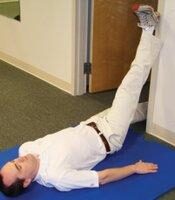
Wall Hamstring Stretch: Step-by-Step Instructions
Find a corner of a wall in your home where you can lay down on your back. Place your right foot up against the wall and your left leg flat on the floor. Make sure that your right knee is fully extended or “locked out” by squeezing your right thigh muscle and bend your right ankle down toward you so you feel a gentle stretch in your right calf. Choose a distance from the wall in which the stretch is challenging, yet tolerable. From here, squeeze your abdominals and make sure your low back is pressed against the floor. If you are properly positioned away from the wall, this will create a stretching sensation in the back of your knee, your upper and lower hamstring, and the calf muscles. If the stretch feels intolerable, move farther away from the wall and reposition your leg. When you have found the right distance from the wall, hold the stretch position for 3-5 minutes or until a complete release of the stretch feeling has been accomplished. Switch legs and repeat the stretch. As your hamstring flexibility improves and your address posture becomes more consistent, the next step is building rotational power—incorporating lower body rotation exercises for golf power will help you translate that newfound mobility into a more explosive and controlled swing. As rotational mobility improves, understanding hip rotation speed for golfers becomes the natural next step in translating flexibility gains into real club speed.
Progression and Frequency Guidelines
Before progressing, it helps to ask yourself: is your posture hamstrung at address? Understanding the direct link between hamstring tightness and your setup position will sharpen your focus as you work through each stage of this routine. You can advance the stretch when ready by gradually moving closer to the wall and sliding your leg farther up the wall. Perform this exercise at least 5 days per week. You should begin to notice a big difference in your ability to achieve a correct posture position at address and a more consistent golf swing. For golfers looking to expand their flexibility routine beyond hamstring work, incorporating specific stretching exercises targeting multiple muscle groups can accelerate your progress and enhance overall golf performance. Once you’re ready to build on this foundation, following a 10-minute hip routine to extend your flexibility work is a natural next step that addresses the hip mobility needed to complement improved hamstring flexibility.
Jason Rivkin, GPS, CGFI-FP1
Once hamstring flexibility improves, golfers often benefit from adding the Bretzel stretch for rotational mobility to their routine, as it targets the thoracic spine and hip flexors that work in tandem with the hamstrings during the golf swing. Golfers who struggle with posture faults may also want to correct reverse spine angle with targeted exercises, as this common swing error often persists even after hamstring flexibility improves. If you try these exercises and you find them to be too challenging or uncomfortable, do not continue, until you have consulted with your physician. All exercises for golf should be customized to your needs after a proper evaluation.
Professional Golf Fitness Training Programs
Want to take your golf to the next level? Our FitGolf® Trainers are experts at working one-on-one with you to tailor a training program to meet the specific needs of your body and help you achieve the results you are hoping to see in your golf.
Additional Golf Fitness Resources
Looking for more exercise resources, blog posts or monthly golf-specific exercise content sent straight to your inbox?
