
Many of us have found ourselves in a sedated lifestyle which places us in a seated position for most of the hour of the day. Most of us are guilty of not ‘undoing’ the bad stresses of the day (i.e. stretching, exercise, relaxation) and often becomes a compounded issue over time. Addressing these restrictions requires a comprehensive approach to golf fitness flexibility fundamentals that targets the root causes of movement dysfunction. This week we will be looking at an important area of the body that is most affected by social habits that may be hurting your back and your golf game; the hip flexor. If tight hip flexors are already contributing to discomfort, learning how to relieve lower back pain caused by tight hip flexors is an essential first step before addressing swing mechanics.
Understanding Hip Flexor Anatomy and Function
The hip flexor area can be defined as the area in front of the hip that can consist of the lower abdominal region and upper thigh. In detail, the primary hip flexor complex, named the iliopsoas, begins along the transverse processes of the lumbar spine and along the iliac crest of the pelvis. The iliopsoas travels anteriorly over the ipsilateral coxal bone and attaches to the lesser tubercle of the femur located on the upper groin area. Looking at is function, this muscle plays a huge role in movement in the sagittal plane, influences rotational movement that occurs in the frontal plane as well as hip alignment issues. Due to its line of pull, the hip flexor can be stretched in both hip extension and 90 degree internal rotation. When this muscle becomes chronically shortened or restricted, the consequences extend well beyond the hip itself — understanding how tight hips create back pain and stiffness helps illustrate why addressing the iliopsoas is so critical for both golfers and anyone living a sedentary lifestyle. If you’re ready to take action, explore these exercises to improve hip mobility for your swing and begin restoring the range of motion your game depends on.
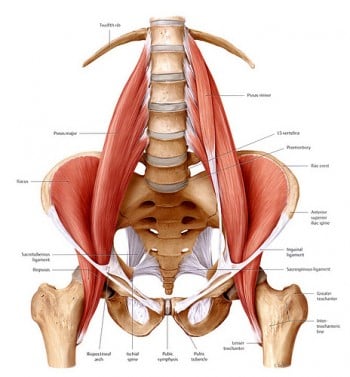
How Tight Hip Flexors Impact Your Golf Swing
When sustaining a seated position for long periods of time, the hip flexor is able to shorten which allows for the connective tissues to bind up if not properly stretched. Let us look at this particular area in how it effects the golf swing if the right hip flexor is shortened. Due to the needed internal rotation of the right hip at the top of the swing (right handed golfer), any restriction or hip misalignment can decrease the ability to do so. This lack of ‘loading’ of the right hip prevents efficient firing to promote proper sequencing in the downswing. Hip extension on the right side is also necessary to completely ‘finish’ the swing. A restricted iliopsoas complex will again prevent such movement and create an abbreviated swing. Developing hip mobility for swing consistency addresses these fundamental movement restrictions. Incorporating exercises like the single leg deadlift movement can help address these restrictions by improving hip mobility and strengthening the posterior chain for better swing mechanics.
Effective Hip Flexor Stretching Techniques
To effectively stretch the hip flexor, refer to kneeling hip flexor stretch link. It will give you proper details on how focus the stretch on the proper side. As a general rule of thumb, spend more time stretching the side that feels tighter. It is important to create balance in the body to reduce the risk of injury. Work consistently on increasing hip flexibility and see it improve your golf swing and lifestyle. For a structured starting point, try this hip mobility routine for a better golf swing to build consistency into your daily practice.
If you try these exercises and you find them to be too challenging or uncomfortable, do not continue, until you have consulted with your physician. All exercises for golf should be customized to your needs after a proper evaluation. It’s also worth exploring the hip mobility and lower back pain connection to better understand how restricted hip flexors can contribute to chronic discomfort both on and off the course. If you’re already experiencing tightness or discomfort, incorporating stretches to relieve golf-related back stiffness can be an effective next step alongside hip flexor work.
Professional Golf Fitness Training
Want to take your golf to the next level? Our FitGolf® Trainers are experts at working one-on-one with you to tailor a training program to meet the specific needs of your body and help you achieve the results you are hoping to see in your golf.
Additional Golf Fitness Resources
Looking for more exercise resources, blog posts or monthly golf-specific exercise content sent straight to your inbox?
