
Why Single Leg Deadlifts Improve Golf Performance
One general movement comes to mind that forces an individual to display a great amount of motion, an ability to control and stabilize multiple joints, as well as test the balance system as a whole. That list are qualities that are needed when executing a golf swing with efficiency and power. Full range of motion to complete the swing, stability in rotational directions, and balance left, right, front, and back – all skills that require solid balance training fundamentals to master effectively. Pairing these qualities with dedicated golf stability and rotary control exercises creates a strong foundation before advancing to power-focused movements like the single leg deadlift, which is an extremely useful tool in building power and rotary stability.
How to Perform the Single Leg Deadlift
As this move is executed, it becomes apparent quickly how one side of the body differs from the other. This makes this drill a great diagnostic tool to find out the areas that require the focus. In particular, hip stability for a more consistent swing is one of the most common imbalances uncovered—and addressing it directly can have a significant impact on your overall performance. Understanding how hamstring flexibility and hip hinge mechanics interact is equally important, as tight hamstrings can quietly undermine the very movement patterns this drill is designed to build.
Step-by-Step Exercise Instructions
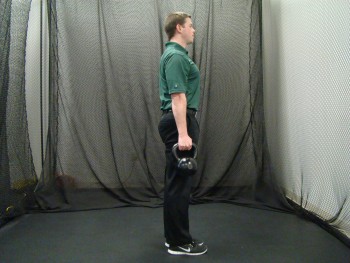
To perform this drill, stand with the feet together with your toes touching holding a weight in one hand (preferably a kettlebell). Start by extending one hip while maintaining an upright posture (a good thought is to scrape the foot along the floor). Once the hip is extended, continue to reach back with the leg allowing the upper body to lean forward (note how a straight line can be drawn along the spine through the length of the leg!). Once the weight being held by the opposite hand touches the ground, reverse the movement to the start by squeezing both cheeks. Paying close attention to how weight distributes through your planted foot throughout the movement is key—developing foot pressure awareness for better footwork will help you stay grounded and controlled through each rep. If you want to further improve balance and control in your swing, pairing this drill with complementary balance-focused exercises is an excellent next step.

Repetitions and Progression Guidelines
Please note that this is a skill movement so there will be a learning curve; be patient and move with a purpose. Never rush this move or put in ‘sloppy’ reps just to finish the drill. This is a movement that should be done using low repetitions to start. Low repetitions will allow you to focus on the movement and force you to ‘reset’ each time you stand over the weight. Paying attention to back knee stability to reinforce single-leg hip control is another key detail that keeps each rep clean and intentional. Building glute activation to power single leg stability is a key reason this drill delivers such meaningful results when performed with intention. If you notice tightness or discomfort during the movement, it may be worth exploring hip mobility to relieve back stiffness, as restricted hips are often at the root of poor movement patterns in this drill. This deliberate approach to building rotary strength and balance is exactly what it takes to spring your body into a powerful swing.
Starting Repetitions and Weekly Progression
Begin by doing 3-5 repetitions a side and increase the repetitions up to 10 over a couple of weeks. As your balance and hip stability improve, pairing this movement with kettlebell deadlift for golf power development and exploring swing-phase balance drills to build on your deadlift is an excellent next step in building a stronger, more powerful swing is an excellent next step in building a stronger, more powerful swing.
Troubleshooting Common Issues and Physical Limitations
If the difficulty of this drill does not improve after a few sessions, some underlying physical issues may be in need to addressing. Things like hip range of motion and strength – working through dedicated hip mobility drills for lower body rotation can directly address these foundational weaknesses – developing targeted hip stability exercises can address these foundational weaknesses – abdominal strength for pelvic stability, or rotational strength along the spine – where the thoracic spine role in rotary stability becomes especially critical – to help stabilize during the movement. Many areas must display great strength and balance during the move. Master this move to see better rotary control in your golf swing. From there, developing pelvic rotation and downswing sequencing is the natural next step in translating that rotary strength into a more powerful, efficient swing.
