The Reality of Golf Injuries: Low Back Pain Statistics
Golf is a sport that’s easy to fall in love with, but every regular golfer knows it can be a real pain, literally. There are numerous golf injuries that can result from a faulty swing, bad biomechanics, overuse, and poor physical conditioning. Statistically proven, the most common amateur golf injury is sustained in the low back region. Although injuries are commonly seen in the joints and discs of the spine, the most common back injury in golf are strains of the muscles and soft tissue surrounding the spine.
What Causes Low Back Pain in Golfers
There are many different predictors of low back pain. Some predictors include poor joint mobility, shortened muscle lengths, abnormal body composition, and poor pelvic and core stability. Learning more about how pelvic stability supports lumbar health in golf can help clarify why this predictor carries so much weight. Not having the ability to stabilize the body’s core and low back can be very detrimental to spine health and the golf swing. It leads to faulty biomechanics which in turn will lead to faulty swing mechanics. Many amateur golfers mask poor spine stability and weaknesses by deviating away from proper swing technique to achieve the feeling of a full swing. Doing this time and time again, round after round, can be detrimental to the spine and can make golf a debilitating sport to play. Understanding a comprehensive spine health approach is essential for addressing these underlying issues effectively.
Side Plank Exercise: A Key Predictor and Solution
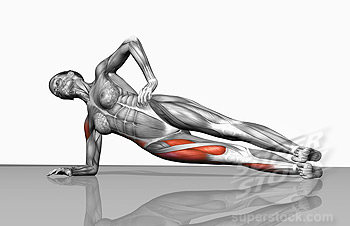
One fitness predictor of low back pain is poor endurance in the side plank position. The side plank is a great exercise to challenge your core and the stabilizers of the lumbar spine.
How to Perform the Side Plank Correctly
To perform the side plank, start by lying on your left side with your feet on top of each other and your left elbow directly under your left shoulder. From here, make sure that your top ear, shoulder, hip, knee, and ankle are aligned and form a straight line. Once that is determined, slowly lift your hips off the ground until your spine is completely straight and your body is aligned and symmetrical. Keep your top shoulder back by pinching your shoulder blades together. Hold for as long as you can. You know you’re done the set once you can no longer hold your hips up to where you first started, or you begin to rotate the shoulders and torso forward or back. Pairing this exercise with a broader routine to prevent back pain and stiffness during golf rounds will give you the most comprehensive protection for your spine on the course. Developing hip and glute strength for swing consistency works hand in hand with side plank training, as strong hips reinforce the pelvic stability the side plank demands.