
Advanced Core Stability Progressions for Golf Performance
At FitGolf Performance Centers, developing core strength is foundational – but true golf performance requires more than isolated abdominal activation. While early-stage exercises like the pelvic tilt help establish awareness and control, long-term improvement in swing consistency, power, and injury resilience depends on progressing into integrated, functional core stability training.
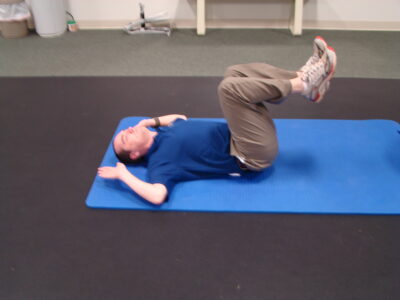
Why the Pelvic Tilt Is Just the Starting Point
The lower abdominal pelvic tilt is an excellent starting point. It teaches:
- Pelvic awareness
- Neutral spine positioning
- Proper abdominal engagement
- Reduced lumbar stress
However, golf is a dynamic, rotational sport performed in standing. To translate early core activation into real performance gains, we must progressively challenge the core in positions that resemble the golf swing.
Core training for golfers should evolve through three key phases:
Phase 1: Controlled Stability — Training the Core to Resist Motion
Once the pelvic tilt is mastered, we progress to controlled stability exercises that maintain neutral spine positioning while introducing limb movement. Examples include:
- Dead bug variations
- Bird dogs
- Glute bridge progressions
- Modified side planks
These exercises train the core to resist unwanted motion — a critical ability during the transition and downswing. Incorporating side plank for low back pain prevention in golf at this stage builds the lateral stability needed to protect the lumbar spine as demands increase.
Phase 2: Anti-Rotation and Anti-Extension for Golf-Specific Stability
Golf performance depends heavily on the body’s ability to control rotation before producing it. This is where anti-rotation and anti-extension exercises become essential.
Examples include:
- Pallof presses
- Tall-kneeling cable holds
- Stability ball rollouts
- Front plank progressions
These movements strengthen the deep stabilizing system of the trunk while reinforcing proper pelvic positioning. The goal is to create a stable platform from which the hips and thoracic spine can rotate efficiently. Pairing this anti-rotation work with hip and pelvic control to complement core training ensures that both systems develop in sync, maximizing swing consistency.
Phase 3: Functional Core Training in Standing and Rotation
Now we bridge the gap between training and the golf swing.
Functional core training must ultimately be performed in standing, with weight shift and rotation. Examples include:
- Split-stance cable rotations
- Medicine ball rotational throws
- Half-kneeling lifts and chops
- Step-behind rotational patterns
At this stage, the core is no longer just stabilizing – it is coordinating energy transfer from the ground up. The pelvis initiates, the torso follows, and the arms deliver – mirroring efficient kinematic sequencing. This coordinated transfer is the physical foundation of rotational core strength for X-Factor power — the differential between hip and shoulder rotation that drives clubhead speed.
How a Well-Developed Core Improves Your Golf Game
A well-developed core:
- Improves posture at address
- Enhances pelvic control in transition
- Supports proper sequencing
- Reduces compensatory lower back stress
- Improves balance and consistency
- Increases sustainable power
Many golfers who struggle with back discomfort, loss of distance, or inconsistent ball striking often lack the stability necessary to support efficient rotation. These same deficiencies are directly tied to the swing faults that core weakness creates — compensatory movement patterns that not only reduce performance but increase injury risk over time.
When the core functions properly, the hips and thoracic spine can move freely – allowing you to generate speed without excess strain. Conversely, when core stability is lacking, the body compensates – placing undue stress on the shoulders and upper extremities, contributing to the shoulder injuries that core dysfunction can cause.
Core Strength vs. Core Control: What Golfers Actually Need
It’s important to distinguish between strength and control. Many golfers have strong abdominal muscles, yet still demonstrate poor pelvic positioning or inefficient sequencing. True golf-specific core development emphasizes:
- Neuromuscular coordination
- Segmental control
- Rotational timing
- Endurance under load
That’s where structured progressions make the difference. Beginning with golf stability and movement re-education exercises ensures the neuromuscular foundation is in place before advancing to higher-demand training.
Bringing It All Together
The lower abdominal pelvic tilt is a valuable starting point – but it’s just the beginning. A comprehensive golf fitness program must systematically progress from activation to stabilization to dynamic integration.
When core stability is properly developed and integrated, golfers experience:
- Greater consistency
- More effortless distance
- Reduced injury risk
- Improved longevity in the game
Train your core with purpose. Progress it intelligently. Integrate it functionally.
That’s how you truly “Use Your Core for More.”
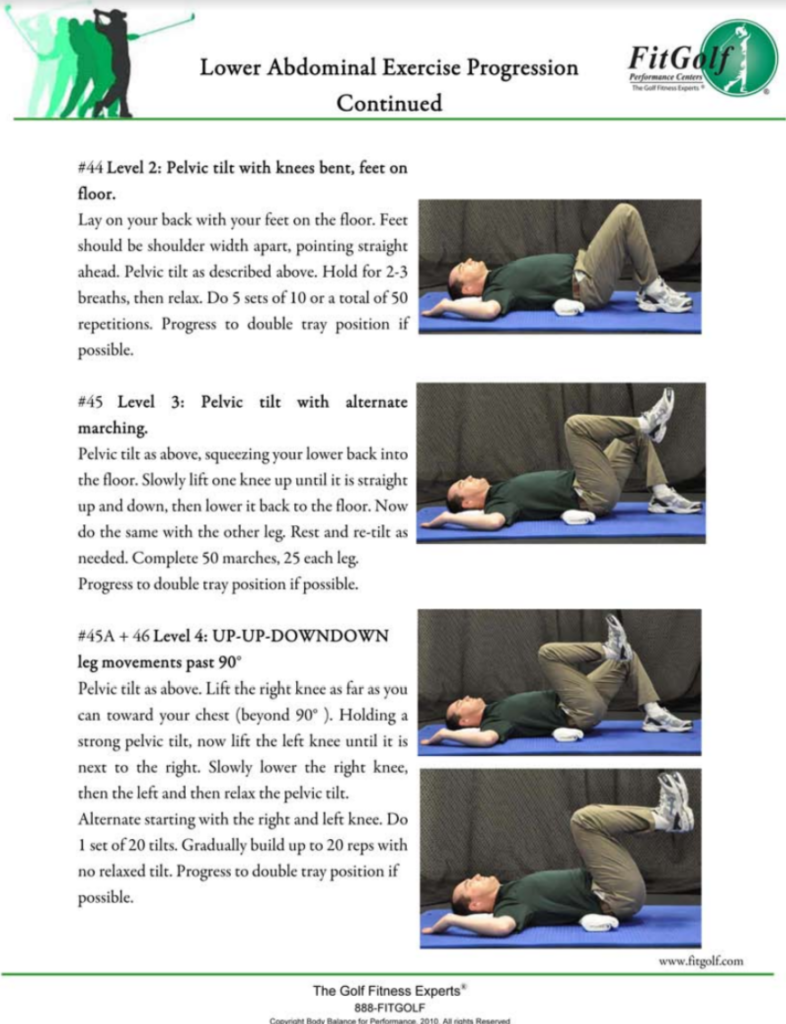
If you try these exercises and you find them to be too challenging or uncomfortable, do not continue, until you have consulted with your physician. All exercises for golf should be customized to your needs after a proper evaluation.
Come In and See Us
Want to take your golf to the next level? Our FitGolf® Trainers are experts at working one-on-one with you to tailor a training program to meet the specific needs of your body and help you achieve the results you are hoping to see in your golf.
Want More Resources?
Looking for more exercise resources, blog posts or monthly golf-specific exercise content sent straight to your inbox?
