
Golf fitness training to eliminate sway and slide? One of the most common swing faults our golf fitness coaches observe is excessive lateral (side-to-side) movement. When excessive lateral movement occurs in the back swing it is called a sway. When it occurs in the downswing it is called a slide. Both sway and slide are detrimental to both consistency of ball striking and power. Excessive lateral movement throws off correct swing sequencing which makes it very challenging to have the club head square to the ball at impact. Incorporating targeted posterior chain work—such as the glute bridge for hip stability and sway correction—is one of the most effective ways to build the lateral control needed to eliminate these faults. Addressing these faults requires more than swing tips alone—incorporating dynamic balance training for a stable swing is a foundational step toward eliminating unwanted lateral drift for good.

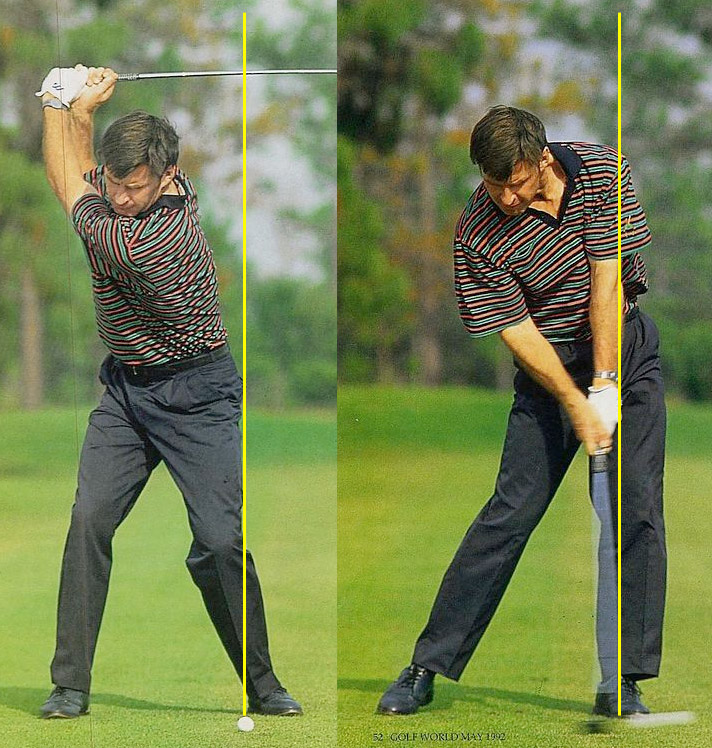
What Causes Sway and Slide in the Golf Swing?
Sway and slide can result from a number of different physical limitations. A lack of hip stability is one of the most common culprits.
How the Gluteus Medius Stabilizes Your Golf Swing
One of the most important muscles for lower body an d lateral stability is the gluteus medius, which is located on the outside of the buttocks. A strong and active gluteus medius will prevent lateral movement throughout the swing which will allow you to properly coil and generate power within a stable posture. Luckily, for all of you swayers and sliders, strengthening the gluteus medius is a very simple task and requires minimal equipment. The clam shell exercise is a great beginner exercise for any golfer looking to add stability and consistency to their golf swing. Here’s how they are performed:
The Clam Shell Exercise: Best Drill to Fix Sway and Slide
First, get into a side lying position. Stack the top leg on top of the bottom and bring your knees towards your chest. From here, keep your feet together and raise the top knee to form a clam shape. You should feel your top buttocks tighten and hold for 2-3 seconds. It is important to make sure your pelvis does not rotate backwards during the motion, so make sure your top hip stays directly above the bottom hip throughout the duration of the exercise. To make this exercise more challenging, simply place a rubber tubing ring around your legs just above the knee joints. Building this hip stability foundation is essential—explore hip stability training for a consistent swing to deepen your understanding of how targeted hip work translates directly to swing repeatability. Neglecting this kind of stability work can contribute to swing faults caused by poor hip and shoulder stability that not only hurt your game but can lead to injury over time.
Golf Fitness Tips to Build Long-Term Swing Stability
Perform 2 sets x 15 reps of clam shells everyday and you will feel stability and power added to your swing. To further reinforce hip stability and build on this foundation, try incorporating this simple hip stability exercise for golfers into your routine. Rounding out your stability work with shoulder stability exercises for sway-free swings ensures your upper body supports the same rotational control you’re building in the hips.
To further challenge your hip stability and translate it into swing power, consider adding the single leg deadlift to reinforce hip control as a natural progression from the clam shell. For any questions regarding exercise to add stability into your golf swing please email me at [email protected] For a comprehensive breakdown of the movement patterns behind these faults, be sure to fix the sway and slide with our dedicated guide.
Jason Rivkin, BS, ATC, GPS, CGFI-FP1
[gview file=”http://fitgolf.com/files/2013/06/sidelyingbentkneehipabductionclams.pdf”]
